
Global Operations
Introduction
Through focused exploration and appraisal, Cobalt has built a world-class deepwater portfolio. Our demonstrated track record of exploration excellence, combined with a disciplined plan for future oil production, position the company’s assets for long-term value creation.
Assets
Through our discriminating “first mover” approach, Cobalt has compiled an impressive and unique portfolio of assets in highly attractive oil prone basins, both in the United States and abroad. Cobalt operates the majority of these assets, thereby influencing the pace of operations and enhancing value. We acquired the industry’s best subsurface and seismic data that allowed us to identify deepwater oil reservoirs trapped in subsalt and pre-salt layers in the deepwaters of the U.S. Gulf of Mexico and West Africa.
Gulf of Mexico
The Gulf of Mexico’s deepwater oil basin, one of the most prolific in the world, has been a focus for major oil exploration companies for more than three decades. Increasingly, focus has shifted to the technically challenging, but highly promising, deepwater subsalt regions. The primary technical challenge in these regions is to seismically resolve potential structures below thick layers of salt. Consequently, Cobalt has spent over $400 million since our inception to acquire and process the highest quality seismic data and technology. The investment in seismic data and its utilization by our experienced workforce have been essential elements in Cobalt’s success in identifying prospects, acquiring the leases and successfully drilling discoveries in the Gulf of Mexico.
As a major player in the Gulf of Mexico, Cobalt holds lease interests in approximately 125 deepwater blocks in the Inboard Lower Tertiary and Miocene plays. We operate over 85 percent of our Gulf of Mexico leases.
West Africa
Through the development of an early geologic regional model, Cobalt had the foresight to acquire several high-potential licenses off the coast of Angola and Gabon, pioneering West Africa’s pre-salt play.
To date, Cobalt has drilled nine exploratory wells, three appraisal wells and four development wells (one of which was drilled to be used as a pressure-maintenance well in the Cameia development) in the northern pre-salt Kwanza Basin offshore Angola, and one exploratory well in the pre-salt deepwater region offshore Gabon. Fifteen of these wells have been successful in finding pre-salt hydrocarbons. This is a remarkable and a highly unusual start in establishing a position in such an immense new regional play.
Off the coast of Angola, Cobalt holds a 40 percent working interest in, and is the operator of, two blocks— 20 and 21—covering a combined 2.4 million acres. Our Cameia #1 discovery on Block 21 confirmed the presence of an expansive pre-salt hydrocarbon reservoir, proving our geologic model and de-risking the new pre-salt play in the deepwater offshore Angola. The Cameia #2 and #3 appraisal wells provided the validating evidence that allowed us to accelerate work toward the sanctioning of an early production system. We then drilled the Cameia #3, #4 and #5 as successful development wells, followed by completion of drilling operations on the Cameia #1A well, each of which is planned to be used as part of the Cameia Development. Our Mavinga #1 pre-salt discovery on Block 21 mirrored our Cameia pre-salt discovery from the perspective of fluid and reservoir quality. Our Lontra #1 pre-salt discovery on Block 20 confirmed an oil and gas accumulation with better than expected reservoir quality. Our Bicuar #1A discovery in Block 21 was our first discovery where mobile hydrocarbons were found in the deeper pre-salt syn-rift reservoir. Our Orca #1 well on Block 20 resulted in the company’s fifth consecutive pre-salt discovery in Angola’s Kwanza Basin and our Orca #2 appraisal well confirmed the presence of a large oil accumulation in the Sag section of the pre-salt, and also confirmed the discovery of oil in the deeper syn-rift pre-salt reservoir. Orca is the largest oil discovery found to date in the Kwanza Basin and has an estimated resource potential of between 400 – 700 MMBO. Also in Block 20, our Zalophus and Golfinho exploratory wells resulted in additional discoveries.
In Gabon, we have a 21.25 percent interest in the 2.2 million acre Diaba license operated by Total Gabon. Results of our Diaman #1 discovery well successfully confirmed the existence of a working petroleum system. This was the first test of the pre-salt in deepwater Gabon.
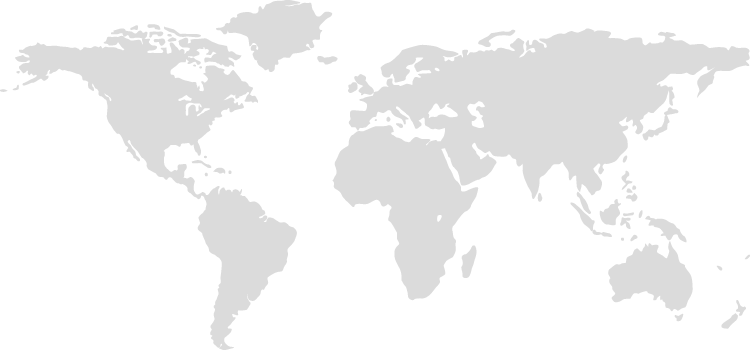
Interactive Map
Click on a region to get started.
Oil Exploration
Cobalt’s investment in seismic data, technology and talented and experienced professionals significantly enhanced our ability to quickly identify the geological and geophysical characteristics of the subsalt and pre-salt formations. This directly led to our early access of leading positions in both the Gulf of Mexico and West Africa.
Cobalt’s approach to exploration begins with an in-depth regional understanding of the Petroleum Systems of oil prone basins. This requires an integrated approach, utilizing the latest technology by highly experienced explorationists with an impressive track-record of world-class discoveries. This approach led to our leading positions in the subsalt play in the deepwater Gulf of Mexico and the pre-salt play in offshore West Africa.
Gulf of Mexico
Heidelberg
The Heidelberg discovery, in which Cobalt owns a 9.375 percent working interest, was drilled in approximately 5,000 feet of water. The discovery well was drilled to a total depth of 30,000 feet and encountered more than 200 feet of high-quality, Miocene reservoir sands. The Heidelberg field commenced production in January 2016, representing Cobalt’s first production and revenue.
North Platte
Cobalt’s first operated Inboard Lower Tertiary discovery is North Platte, located in the deepwater Gulf of Mexico. Cobalt owns a 60 percent working interest in the North Platte unit. North Platte’s discovery well was drilled in 2012 to a depth of 34,500 feet and encountered over 550 net feet of oil pay in multiple high quality Inboard Lower Tertiary reservoirs. This well’s results exceeded pre-drill expectations, confirming Cobalt’s geologic model for the Inboard Lower Tertiary trend. In late 2015, we completed drilling the initial North Platte appraisal well as a successful well. This appraisal well encountered over 550 feet of net oil pay, which is similar to the discovery well, but with evidence of better developed reservoirs. We then completed additional sidetrack appraisal drilling operations at North Platte, which were successful and encountered approximately 500 feet of net oil pay in what appears to be excellent reservoir quality rock. In 2016, we drilled an additional appraisal well, which encountered approximately 650 feet of net oil pay and results indicate high quality Inboard Lower Tertiary Wilcox reservoirs on the eastern flank of the field. We then sidetracked this appraisal well to further analyze the extent of the eastern flank of the field. In early 2017, we drilled a final sidetrack and encountered approximately 400 feet of high quality Lower Wilcox pay, after which we conducted a bypass for core operation and successfully recovered approximately 200 feet of conventional core.
Anchor
The Anchor discovery, in which Cobalt owns a 20 percent working interest, was drilled in 5,183 feet of water. The Anchor #2 exploratory well, located approximately 140 miles off the Louisiana coast, was drilled to a total depth of 33,749 feet and encountered significant high quality pay in multiple Inboard Lower Tertiary Wilcox reservoirs. At the time it was drilled, Cobalt considered the Anchor discovery to be one of Cobalt’s best wells drilled in the deepwater Gulf of Mexico. Anchor represents Cobalt’s fourth significant discovery in the Gulf of Mexico. The results of the discovery well further confirmed Cobalt’s Inboard Lower Tertiary model. An appraisal sidetrack well was drilled down dip to delineate the Anchor discovery well. The appraisal well encountered 694 feet of net oil pay in a hydrocarbon column of at least 1,800 feet in Inboard Lower Tertiary reservoirs. The Anchor #3 and #4 appraisal wells were successful, as well. Anchor #4, which was spud in late 2016, resulted in approximately 800 feet of net oil pay.
Shenandoah
The Shenandoah discovery, in which Cobalt owns a 20 percent working interest, is an Inboard Lower Tertiary discovery drilled in approximately 5,750 feet of water. The discovery well was drilled to a total depth of 30,000 feet and encountered approximately 300 feet of unusually high-quality Inboard Lower Tertiary reservoir sands. The Shenandoah #2R appraisal well encountered more than 1,000 net feet of oil pay in multiple high quality Inboard Lower Tertiary-aged reservoirs. Log and pressure data from both the Shenandoah appraisal well and the Shenandoah discovery well indicate the presence of exceptionally high quality reservoirs and hydrocarbons. Our Shenandoah #3 appraisal well found an expanded geologic reservoir section and confirmed excellent reservoir qualities. The Shenandoah #4 appraisal well tested the updip extent of the basin. The subsequent Shenandoah #4 sidetrack encountered over 600 feet of net oil pay, extending the lowest known oil column downdip. The Shenandoah #5 appraisal well encountered approximately 1,000 feet of net pay in multiple high quality Inboard Lower Tertiary sands. The Shenandoah #6 appraisal well encountered wet Wilcox reservoirs and was sidetracked to locate the oil-water contacts. We and our co–owners are continuing to explore development options for the field.
Angola
Cameia
Off the coast of Angola, Cobalt has been the front-runner in the exploration of the pre-salt Kwanza Basin. In Angola Block 21, Cobalt drilled the Cameia #1 pre-salt exploratory well as a successful discovery well.
Results of a production test performed in the Cameia #1 well provided evidence that the well has the potential to produce in excess of 20,000 barrels of hydrocarbons per day, exceeding Cobalt’s pre-drill estimates. The well was drilled in 1,680 meters (5,512 feet) of water to a depth of over 4,880 meters (16,010 feet), and encountered a continuous oil column of nearly 360 meters (1,181 feet) with over 75 percent net-to-gross pay estimate. No oil/gas or oil/water contacts were observed.
The Cameia #2 appraisal well confirmed the presence of a large hydrocarbon accumulation in a high quality reservoir and discovered a new hydrocarbon-bearing zone at least 134 meters (440 feet) deeper than that which was observed in the Cameia #1 exploratory well. The Cameia #3 appraisal well reconfirmed the estimated field resource range of 300-500 million barrels of hydrocarbons. This well was followed by the successful drilling of the Cameia #4 and #5 development wells, and additional drilling on the Cameia #1A well.
Mavinga
Following the Cameia pre-salt discovery, Cobalt drilled the Mavinga #1 pre-salt exploratory well as a successful oil discovery well on Block 21. The Cobalt operated Mavinga #1 well, located approximately 8 miles (12.5 kilometers) northwest of Cobalt’s Cameia discovery, reached a total depth of 17,431 feet (5,313 meters) and encountered approximately 100 feet (30 meters) of net oil pay. This discovery was confirmed by the successful production of oil from mini drill stem tests, direct pressure and permeability measurements, and log and core analyses.
Cobalt estimates a gross oil column of up to 650 feet (200 meters) at the crest of the Mavinga structure updip of the Mavinga #1 well location. Additional drilling will be required to confirm the ultimate gross thickness of the mound and its reservoir quality.
Bicuar
Cobalt’s Bicuar exploratory well on Block 21 was drilled to a measured depth of 5,739 meters (18,829 feet) in a water depth of approximately 1,500 meters (4,900 feet) and found 56 meters (180 feet) of oil and condensate in multiple pre-salt intervals. Results of an extensive logging, coring and fluid acquisition program confirmed the existence of both oil and condensate in multiple intervals. No free gas zones or water contacts were observed. Importantly, Bicuar was Cobalt’s first discovery where mobile hydrocarbons were found in the deeper pre-salt syn-rift reservoir, which supports the analog to Brazil’s pre-salt basin and potential upside across other Cobalt Kwanza Basin prospects.
Bicuar was a significant success, not only geologically, but also operationally. Originally estimated to take 130 – 150 days to drill this well, Cobalt was successful in safely drilling this well in only 59 days dramatically reducing the total cost of this well. This performance was achieved through improved drill bit performance, applying learnings from previously drilled wells, and experiencing less rig downtime than expected. While applying these efficiencies, Cobalt rigorously maintained its unwavering commitment to safety and environmental protection.
Lontra
On Block 20, the Lontra #1 exploratory well was drilled to a total depth of 4,195 meters (13,763 feet) and penetrated approximately 75 meters (250 feet) of net pay in a very high quality reservoir section. The discovery well encountered both a high liquids content gas interval and an oil interval. A drill stem test was conducted in the high liquids content gas interval and successfully produced a sustained flow rate of 2,500 barrels per day of condensate and 39 million cubic feet per day of gas.
Orca
Cobalt’s Orca #1 deepwater pre-salt exploratory well on Block 20 was Cobalt’s fifth consecutive exploration discovery and sixth consecutive successful well in the deepwater pre-salt Kwanza Basin offshore Angola. The well found 75 meters (250 feet) of net oil pay in multiple pre-salt intervals.
Zalophus
In 2016, Cobalt drilled the Zalophus deepwater pre-salt exploratory well on Block 20. Zalophus resulted in a significant discovery of condensate and gas and represented Cobalt’s sixth pre-salt discovery offshore Angola and its third discovery on Block 20.
Golfinho
Cobalt followed the Zalophus success by drilling the Block 20 Golfinho #1 well as Cobalt’s seventh successful pre-salt exploratory well in the Kwanza Basin offshore Angola.
Diaba
The Total Gabon operated Diaman #1B well, drilled on the Diaba block, offshore Gabon, was the first test of the pre-salt in deepwater Gabon. The well reached its total depth of 5,585 meters (18,323 feet), and encountered approximately 50-55 meters (160-180 feet) of net hydrocarbons in the objective pre-salt formations. The Diaman #1B well successfully confirmed the existence of a working petroleum system, a salt seal, and high-quality sandstone reservoirs.
Oil Development & Production
We continue the evolution of our business model, transitioning from solely an oil exploration company to exploration, appraisal and development.
Maintaining a stewardship position in regards to Health, Safety, Security and Environment (HSSE), Cobalt’s team has defined and engineered a standardized and repeatable procedure for sub-sea development. We also leverage third-parties to deliver creative, effective, and timely solutions.
The Heidelberg field in the deepwater Gulf of Mexico was sanctioned in May, 2013, and first oil was achieved in January 2016, significantly ahead of schedule and favorable to budget. We currently have five producing wells at Heidelberg.